
Adoption of a new dog is a thrilling adventure. It is also a huge responsibility. Teaching your dog to live happily in the human world is one of the most significant things that you can do. Training comes in at this point. However, there are so many different forms of dog training methods, so what is the right one?
Imagine that it is a choice of a learning style. There are those who learn through reading, doing and those through watching. Dogs are the same! Every dog is a personal being with its personality. This is because the most appropriate approach usually would depend on the temperament of your dog, your personal lifestyle, and your desired outcome.
You will take a walk through the guide on the most popular and Top Types of dog training methods. The knowledge of these various styles will make your decision on your and your furry friend informed.
Understanding the Main Types of Dog Training Methods
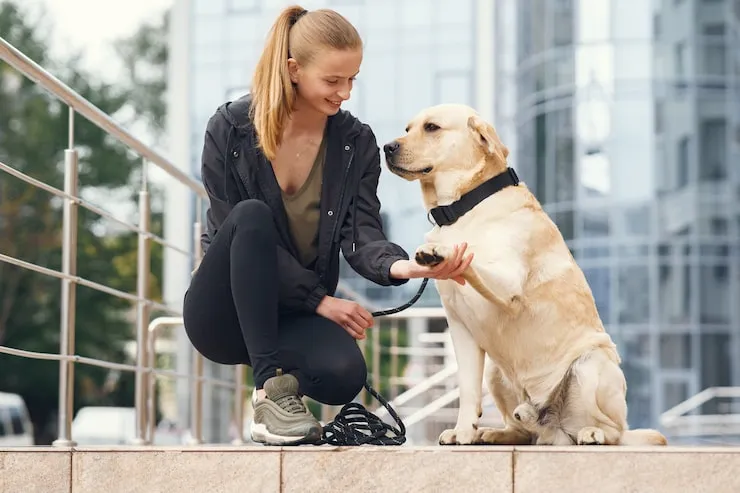
It is good to have the broad philosophy of the various dog training methods before we can move on to the actual training methods. The majority of the contemporary approaches can be divided into two broad groups, i.e. the rewards based and the corrections based approach.
Dog training has transformed the world. Many years ago, a lot of trainers employed the techniques which involved informing a dog about what it did wrong. Modern day most professional trainers and behaviorists suggest reward training methods. It is a positive style that aims at praising the dog on what it did right and is generally regarded as the best and most humane method of establishing a good relationship.
Positive Reinforcement Training: The Power of Rewards
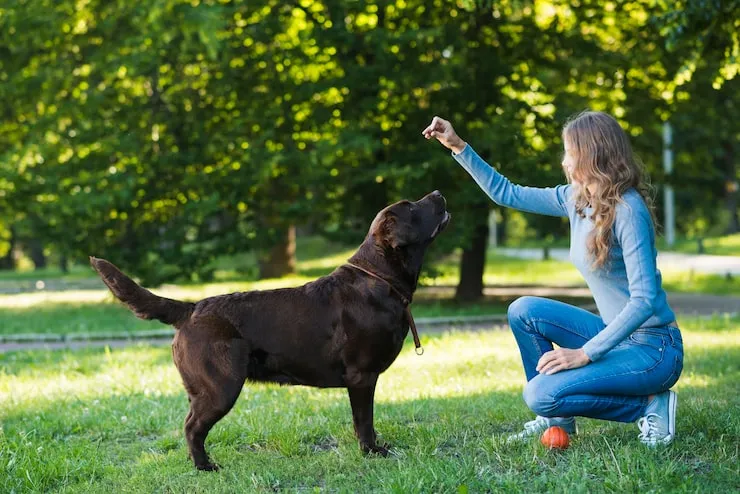
This is the guru of the new dog training. The principles of positive reinforcement training are not complicated: when a good outcome follows a certain behavior, your dog will be willing to repeat the behavior.
Here’s how it works:
- Your dog does an activity which you like (sitting).
- As soon as your dog behaves, you instantly reward them with an object that your dog likes (a delicious treat, a toy, or praise).
- Your dog reasons, "That was a great thing! I should sit more often!"
The technique is excellent in training new commands, good manners and even fun tricks. It helps in gaining confidence, bonding your relationship and gives your dog fun to learn. It is a good place to begin whether you are dealing with basic styles of obedience training or intricate behavior. It is the essence of the puppy training methods and adopted by trainers all over the world.
You may also read :- How Pets Help Children Grow: Top Benefits for Child Development
Negative Reinforcement and Positive Punishment: Understanding the Terms
These are terms that can be misconstrued. They are scientifically learnt rather than based on whether something is bad or good.
- Negative Reinforcement involves eliminating an unpleasant behavior to increase the likelihood of behavior. One such thing is the discharge of pressure on a training collar after a dog sits. When the dog obeys the pressure disappears (is removed).
- Positive Punishment refers to the inclusion of something negative in a bid to reduce the behavior. This may be a verbal rebuke, a leash pop or other forms of physical corrections.
A great number of past dog discipline methods were based on positive punishment. Although it is able to prevent undesired behavior in a short period, it does not impart on your dog what you want them to do instead. It may also instill fear, anxiety and destroy trust. In the majority of cases with family pets, what you desire to do (positive reinforcement) is a better and more joyful way to go.
Science-Based Dog Training: Learning How Dogs Think
This is not a singular technique, but it is a blanket of all techniques that employ well-established science of animal learning. The concepts of science-based dog training are based on the research of animal learning. It is very biased towards positive reinforcement since the statistics indicate that it is effective and has the least number of side effects.
The trainers that apply this method are constantly advancing their techniques according to the new research. They pay attention to the dog behavior modification that is seen as a perspective of the dog. This is regarded as an extremely reliable and moral training method.
A Closer Look at Popular Training Styles and Tools
At this point, we will consider some of the specific styles and instruments you may have heard of. Both of them are alternative applications of the concepts that we have just covered.
Clicker Training for Dogs: Marking the Moment
The Clicker training is the brilliant type of positive reinforcement. It is operated by a small handheld gadget, which produces a clear sound of a click. The reward does not include the click, but happens to be a marker.
The process is simple:
- You train the dog, that when you say click, there follows a treat.
- You CLICK at the moment when your dog does the right thing.
- Then you deliver the treat.
The click is a kind of a camera that captures a photo of your favorite behavior. This marker signal training is such an efficient training and it is very precise and it is one of the best positive reinforcement training methods of shaping complex behaviors.
Relationship-Based Training Methods: You and Your Dog as a Team
Bond is first in this philosophy. Relationship-based training methods are aimed at creating a partnership where your dog is willing to listen to you because you are the provider of good things, safety and fun.
It involves positive reinforcement and a profound knowledge of the body language and the feelings of your dog. Training is done in daily living and play as opposed to formal sessions. It concerns mutual respect and it is one of the foundations of contemporary dog obedience approaches.
Electronic Collar Training (E-Collars): A Tool Requiring Great Care
Electronic collar training or e-collar training is among the most controversial canine coaching techniques. In its inappropriate use, it can be dangerous. But when handled by such an adept practitioner, it can be an accurate tool of communication with some circumstances such as that of training a loyal recall with a runaway dog.
The key to success here is that this is not the first or the only technique that should be used. It needs expert advice so that you do not frighten or insult your dog. When it comes to most simple training requirements, it is unnecessary.
Balanced Dog Training: A Mix of Approaches
Balanced dog training is as simply a combination of instruments and ideologies. Balanced trainer can also teach a behavior through rewards (such as treats) but may also employ corrections (such as a leash check) to teach the dog to obey a previously known command.
Balanced training lies completely in the hands of the individual trainer with his/her skill and focus. It is important to identify a trainer that administers corrections in a balanced, light, and limited way that the dog should fully comprehend what is requested. It is still necessary to be focused on leading the dog to success.
Choosing the Right Method for Your Goals
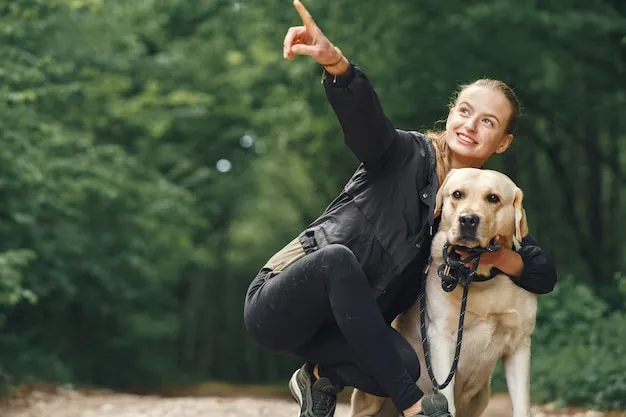
Various domains of emphases within the kinds of dog training methods are sometimes required of different training objectives.
Effective Puppy Training Techniques: Start Positive!
In the case of puppies, it is obvious. The gold standard is the positive preparation of the puppy. Puppies are finding out everywhere! This is time that should be utilized to develop a good relationship of trust. Focus on:
- Socialization: The positively exposing them to new people, places and things.
- Simple instructions: Sit, come and loose-leash walking on the use of treats and praise.
- Preventing-related issues: Making the environment such that they are unable to follow bad habits (such as chewing shoes).
Behavioral Correction Strategies for Specific Issues
What of such severe issues as aggression, fear or excessive anxiety? They frequently need professional approaches to correction of their behavior.
A certified canine behavior consultant comes in here. They do not simply practice orders; they find out the reason why the dog acts in such a way. They apply a canine behavior modification plans, which gradually and safely transform the emotional reaction of the dog to an activator. This is by nearly always operating in positive fear-free ways so as not to complicate the problem.
Obedience Training Styles for Reliable Results
To achieve firm, stable obedience such as an ideal heel or an incredibly swift come, a multiplicity of trainers combines training techniques. The latter may involve positive reinforcement to introduce the behavior and then place mild forms of obedience training such as pressure-and-release (negative reinforcement) on a leash to proof the command on distractions. The point is in the fact that the dog is never programmed to fail and to be punished because of the lack of knowledge.
Expert Insights and Final Thoughts
The process of selecting a method of training can be overwhelming. In order to assist, the following professional guidance might be helpful.
Certified Applied Animal Behaviorist, Dr. Jane Smith: Our decades of study continuously indicate that reward-type techniques are the most effective means of learning, furthermore, they do not hurt or damage the dog, but can uplift its well-being instead. The training ought to be a happy dialogue rather than a battle.
Mark Johnson, 20 year professional Dog Trainer: I always begin with the easiest, most positive process. 95% of the dogs do well on that. To the few, who may require further elucidation of complicated commands, I may introduce other tools, nevertheless, with the purpose of an effective communication rather than being discouraging.
What counts is the ability to find the method that is comfortable to you and effective with your dog. Find a trainer who is tolerant, gentle and one who can give reasons as to why they are doing something. Watch how your dog responds. Happy, wiggling, and interested learner is an indicator that you are on the correct path.
With this knowledge of these Types of dog training methods you will be making the initial and most crucial step in having an awesome well-trained companion. Happy training!
Frequently Asked Questions on the Type of Dog Training Methods.
Q: What is the best method of dog training?
A: The general most effective approach to generalize reports is through positive reinforcement training, as suggested by numerous behavioral sciences and the veterinary. It creates trust, bonds your relationship and is applicable in most situations and most dogs.
Q: Are shock collars an effective form of training?
A: e-collars (e-collars and the so-called shock collars) are controversial. They are able to repress behavior without necessarily educating a dog on what to do in its place. They may also bring about fear and anxiety. They should not be thought of, except at all only, on particular safety training, under the immediate superintension of a most experienced professional, after having tried to the risk of failure on the positive side.
Q: What is the distinction between a dog instructor and a behaviorist?
A: The skills and commands (sit, stay, come) are usually taught by a dog trainer. A behaviorist or a certified behavior consultant is a dog psychologist. They treat and diagnose serious behavioral problems, such as aggression, severe fear, and anxiety, commonly with elaborated behavior modification plans.
Q: I want to start training my dog on my own based on online training.
A: Yes, with simple obedience and basic training of the puppy, there are many excellent online materials that make use of positive reinforcement. Nevertheless, in more complicated matters, behavioral issues, or when you are at a dead end, face-to-face assistance of a qualified specialist can be priceless. They are able to notice the little things that you might fail to notice and give instant feedback.
Q: What is the duration of the training process of a dog with positive reinforcement?
A: Dogs do not learn at the same rate. Learning simple commands would take a couple of brief sessions. Solid obedience in distracting situations is not achieved without practice in weeks or months. The trick is to have short, fun and regular training sessions. Always keep in mind, you are never just teaching only when you are training!