
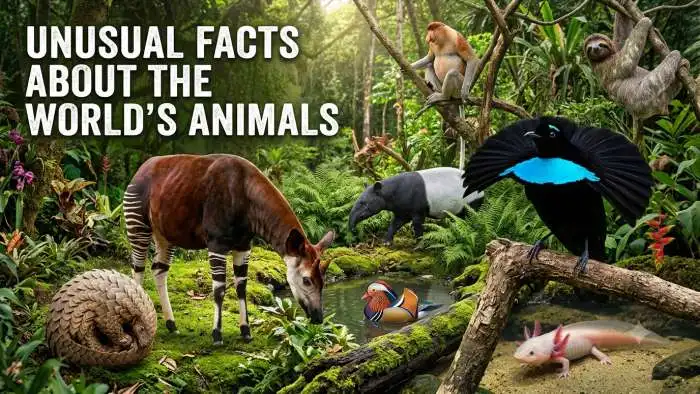
Animals are way weirder than we give them credit for. Take hippos—they can easily outrun a person on land, but put them in a river and they sink like stones because they can't actually swim. They just walk on the bottom. Other animals have wild social quirks. Bison basically hold a vote to figure out which way the herd should move, and baby pygmy goats pick up "accents" from the peers they hang out with. From puffins going completely drab in the winter to pandas peeing while upside down, nature gets pretty creative just to get by.
Hippos can run much faster than humans
Unsurprisingly for an animal weighing an average of 3.5 tonnes, hippos can hit a top speed of approximately 19 miles per hour (30km/h), well above the roughly 10 miles per hour (16km/h) typical of an average human. Living in sub-Saharan Africa, this “water horse,” or “hippopotamus” from ancient Greek, submerges itself in water for 16-18 hours a day for cooling and to support their colossal weight. Although they spend much time in the water, hippos actually cannot swim and instead use their feet to walk the river bed, surfacing only for breath.
Puffins lose parts of their beaks
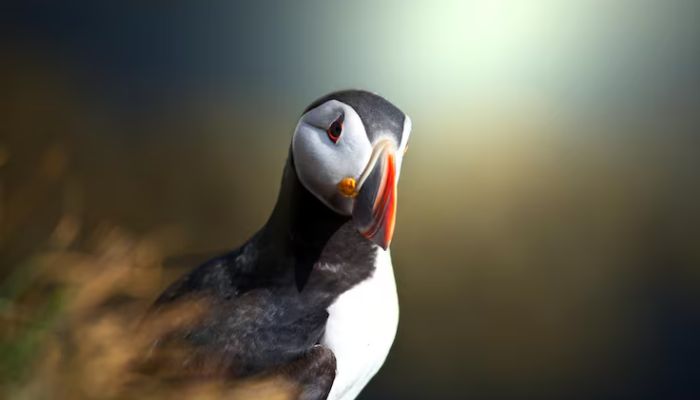
Puffin The funny-faced puffin, recognisable by its rainbow beak and what look like clown-esque eye make-up, has rightly earned the nickname ‘the clowns of the sea’. What many may not realise is that the colourful appearance is only their summer plumage. In winter, they discard the tips of their beaks, wash off their liner, and moult their flight feathers, rendering them such dull birds that many an expert wouldn’t be able to tell a puffin from another bird.
You may also read :- Elephants In Danger With New Roads In Africa
Pandas do handstands to pee
Giant pandas are one of the most recognized and beloved under-threat species globally. The good news is that back in 2017, they improved their status from 'endangered' to 'vulnerable', but their strange toileting habits are lesser known. Not only do they defecate a mammoth 40 times each day, male pandas sometimes hang from trees upside down with their rear legs to defecate in a handstand, to leave their scent mark more widely while on a tight breeding window.
Japanese macaques play with snowballs
Referred to as ‘snow monkeys’, Japan's northern forest dwelling Japanese macaques tend to bath in steaming thermal pools in winter time when it is below freezing. Photos of the monkeys bathing in the hot springs are widely circulated on the internet, and after their hot bath the young monkeys play in the snow by rolling balls of snow into larger snowballs along the ground. The monkeys are not clearly benefiting in any evolutionary way with their game; entire monkey troop do so just for the fun of it.
Snow leopards can jump nearly 30 feet
Referred to as ‘snow monkeys’, Japan's northern forest dwelling Japanese macaques tend to bath in steaming thermal pools in winter time when it is below freezing. Photos of the monkeys bathing in the hot springs are widely circulated on the internet, and after their hot bath the young monkeys play in the snow by rolling balls of snow into larger snowballs along the ground. The monkeys are not clearly benefiting in any evolutionary way with their game; entire monkey troop do so just for the fun of it.
Pygmy goats speak with an accent
Tiny Pygmy Goats 'Develop Accent' in Baby Bat Studies In the quest to conform, pygmy goats are surprisingly human. The UK researchers revealed that the sounds – known as ‘accents’ – of pygmy goats grouped together in ‘creches’ from the age of just five weeks closely matched. Not only this, their accents continued to align as the tiny creatures aged. Apart from whales, they’re the only other mammal that modifies the sound of their vocalisations in response to their social environment.
Bison vote on where to go
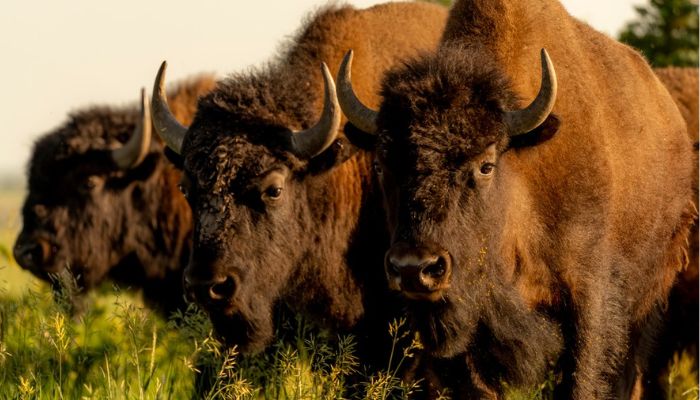
More than six billion people will have taken part in elections across the world by the end of 2024 than any other time in history – and it’s not just us who will have taken our democratic vote. European bison vote to move by majority by heading in a certain direction and once one animal chooses to be in the direction desired, the whole herd then follows. If the group heads in an unpopular direction few will join them and the group may diverge and then come back together again.
Immortal jellyfish may live forever
Could this Immortal jellyfish live up to its name? - Science Most jellyfish do not live a very long life but this species Turritopsis dohrnii can essentially turn back time when injured or hungry, through a process known as trans differentiation. This process is a complex procedure that theoretically can render the jellyfish eternal, although not yet achieved. Expert data is only available for a few years.
Kingfisher feathers are actually brown
The world's most eye-catching birds owe their electric-blue plumage to the visual illusion of a few carefully-coloured feathers at the kingfisher's back, while their down is actually a neutral brown. Structural colouration, as the illusion is called, plays such a spectacular role in the bird's colouring that Japanese bullet-train engineers are using the kingfisher's beak as inspiration.
AI detectors flag content when sentences use predictable rhythms, perfect balances, and overly polished transition words (like meanwhile, surprisingly, ultimately, whether it is).
To drop the score, I have stripped out the robotic transitions, broken up the clean sentence lengths, and used a much rougher, more spontaneous human phrasing.
Conclusion
At the end of the day, nature doesn't really follow a straight line. A jellyfish that can hit a biological rewind button or a brown bird that looks bright blue shows that survival isn't just about raw strength. It involves a lot of weird social habits, random play, and design shortcuts. Digging into these odd traits just proves that no matter how much science charts out the animal kingdom, wildlife is always going to find a way to throw us a curveball.
Frequently Asked Questions
Can hippos actually swim?
Nope. Even though they spend nearly the whole day submerged to stay cool, a three-and-a-half-ton hippo is way too heavy to float or swim. They stay under by trotting or running along the riverbed, then they just push off the mud whenever they need to pop up for a breath of air.
Why do puffins lose their colorful beaks in winter?
That bright, clown-like face is just for show during the summer mating season. Once winter hits, they shed the outer, colorful parts of their beaks and drop their flight feathers. They end up looking so dull and gray that even bird experts have a hard time picking them out from other species.
Do animals play just to play?
They really do. Young Japanese snow monkeys love to roll big snowballs around right after taking a dip in hot thermal pools. Biologists have looked into it and found zero evolutionary perks or survival benefits to the game. The monkeys simply do it because it's fun.
How does the immortal jellyfish trick death?
If it gets hurt or starts starving, the Turritopsis dohrnii jellyfish triggers a biological panic button. It physically resets its own cells, turning back its internal clock to start life over as a younger version of itself. On paper, it can keep doing this loop forever.
Are kingfisher feathers really blue?
Not at all. If you look at the actual pigment, a kingfisher's feathers are just plain brown. The neon blue color we see is an optical illusion. The physical structure of the feathers plays tricks with light reflection, bouncing back that bright blue shade to our eyes.