

Trying new food is one of the best things about travelling, and the best way to get a taste of a place is through its street food. Available from stands, trucks, carts and markets, these easily portable dishes offer a glimpse into a destination's history, culture and culinary heritage. Here’s our pick of the world’s most delicious street foods, including cultural icons such as currywurst and tacos, and culinary gems such as walkie talkies and fischbrötchen.
How many of these delicious street foods have you tried?
1. Hot jam doughnut, Australia
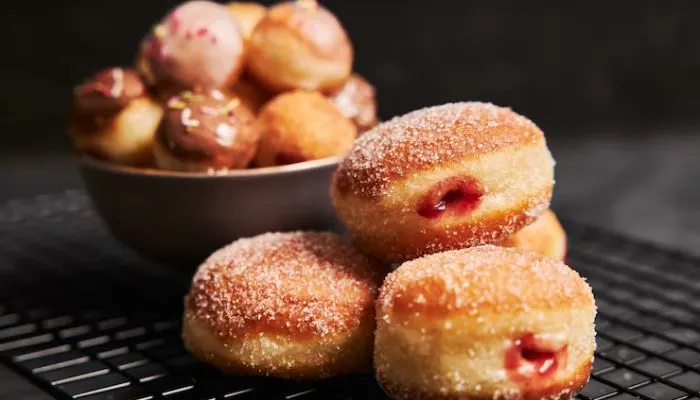
Many cultures have their version of a jam or jelly doughnut; however, in Victoria, Australia, they do things a little differently. The speciality here is the hot jam doughnut, whose dough contains more yeast than most other types. After the dough proves and chefs fill it with jam, they deep fry it and serve it at once. The jam and the doughnut should be scalding hot when you bite into it – otherwise you're not experiencing the real deal. It's possibly the only region in Australia, or even the world, that serves doughnuts this way.
You may also read :- Ancient Roman Cuisine: Popular Dishes and Culinary Traditions Explained
2. Pierogi, Poland
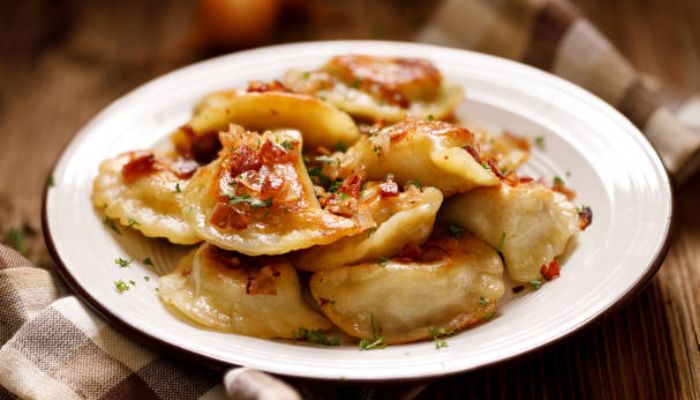
Pierogi is Polish for 'dumpling' – so it's no surprise that pierogi are, in fact, filled dumplings! What is surprising, though, is that people can stuff their dumplings with just about anything they like and still call them pierogi. Classic fillings include potatoes and cheese and beef and sauerkraut, but you could just as easily use berries or chocolate for a sweet twist.
3. Pissaladière, France
Often compared to pizza or focaccia, pissaladière is a unique dish worthy of its own place in food culture. Importantly, the base of pissaladière is thicker than a traditional pizza base – and you won't find tomato or cheese anywhere near the tasty flatbread. Instead, the most common toppings are anchovies, black olives and melty caramelized onions. Food historians have traced the origins of pissaladière all the way back to 14th-century Nice.
4. Empanada, various locations
It's hard to say for sure that Spain definitely produced the empanada, because cuisines from all over the world – including Argentina and the Philippines – associate with the portable turnover. But historians generally believe that the empanada's roots stretch back to 7th-century Galicia in northwest Spain. Since then, many places have embraced them, and rightly so; after all, who can resist a baked or fried pastry that's filled to bursting with meat, cheese or vegetables?
5. Pupusa, El Salvador
The national dish of El Salvador, the pupusa has its very own day dedicated to it. Take one bite, and you'll understand why. Made from cornmeal or rice flour, this thick griddle cake or flatbread is stuffed with cheese or refried beans – and it's served with a fermented cabbage slaw with a serious kick. The Pipil tribe invented it more than two millennia ago, though it didn't become popular nationally until the early 20th century.
6. Làngos, Hungary
Street food vendors across Hungary serve làngos, a type of fluffy, deep-fried bread that's often rubbed with garlic and salt and topped with anything from sour cream and grated cheese to ham, sausages and yogurt. The savoury bread traditionally cooks in a clay oven. People say it rose in popularity during the Hungarian Revolution in 1956, as they sought out comforting sustenance.
7. Jerk chicken, Jamaica
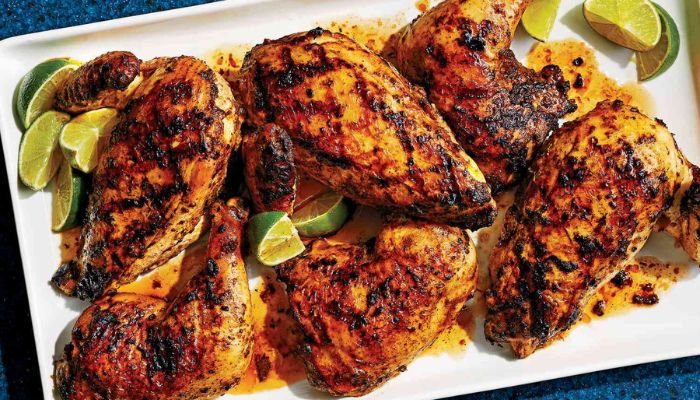
Jerk has been a Jamaican tradition for generations, and Indigenous communities have passed it down – it came to the attention of everybody else from the 17th century onwards. Chicken is marinated or rubbed in jerk spices (usually containing allspice and chillies), then grilled until juicy and hot. Famously fiery, it's a street food favourite throughout the island, and it's enjoyed in many countries all over the world.
8. Käsekrainer, Austria
This lightly smoked pork sausage – laced with cubes of cheese – traditionally accompanies a bread roll and a helping of mustard or fresh horseradish. Now a popular street food snack across the country, two butchers from Upper Austria are said to have invented käsekrainer in the late 1960s. You can also roast or grill it.
9. Blini, Eastern Europe
People first made this traditional pancake in pre-Christian times as a symbol of the sun. It particularly became popular at the end of winter, where people ate it to usher in the return of good weather. Cooks prepare the batter of flour, eggs, milk, yeast, and salt quickly, resulting in a big, thin pancake – which chefs can top with various additions such as cheese, meat, fruit, jam, and caviar (the most well-known option). In the West, hosts have popularized mini versions as a posh party snack. In Eastern Europe, though, vendors sell large pancakes from street food stands.
Conclusion
Travel and food just go hand in hand, honestly. And if you actually want to taste what a city is about, skipping the big restaurants and hitting the street carts is the only way to go. These aren't just cheap snacks you grab on the run. They’ve got actual history tied to them.
You’re literally eating a fried bread that got people through a revolution, or a pancake invented thousands of years ago to welcome the sun. It's wild how different countries can take the same basic ingredients—just flour, meat, and cheese—and turn them into something completely different. If you want to understand a culture, just eat on the sidewalk.
FAQ
Q: What makes the Australian jam doughnut different from regular ones?
A: If you're in Victoria, they throw way more yeast into the mix and fry them up fresh right in front of you. The main thing is the temperature. It has to be insanely hot. If the jam doesn’t almost blister your mouth, you’re doing it wrong.
Q: Is a French pissaladière basically just a pizza?
A: They look similar, but no. The dough is way thicker than what you'd get on a regular pizza. Plus, you won't find a single drop of tomato sauce or cheese anywhere near it. It’s entirely topped with slow-cooked sweet onions, olives, and anchovies.
Q: Where did empanadas actually come from?
A: Everyone connects them with places like Argentina or the Philippines nowadays, but they actually go way back. Most food history points to 7th-century Spain—specifically the Galicia region—as the place where they started.
Q: What exactly is inside an Austrian käsekrainer?
A: It's a smoked pork sausage, but with a massive upgrade. They stuff actual little cubes of cheese right into the meat link. When it hits the grill at a street cart, all that cheese melts inside the skin so it bursts when you take a bite.
Q: Are blinis supposed to be tiny bite-sized snacks?
A: Only if you're eating fancy hors d'oeuvres at a wedding in the West. Back in Eastern Europe where they belong, they’re just big, regular-sized pancakes. Street stands sell them full-size, rolled up with things like meat, fruit, or even caviar.