
Many of the world's most incredible landmarks get barely any tourists. Incredible spots like Tunisia's El Jem arena or Saudi Arabia's Hegra ruins easily match famous icons like Rome’s Colosseum or Petra, but they stay completely quiet. Others, like Mongolia’s giant Genghis Khan statue or England's Lincoln Cathedral, are just too remote or awkward to reach. Political trouble and safety warnings also keep people away from stunning ancient sites in Iran and Myanmar. Ultimately, these overlooked marvels prove you can find mind-blowing history and empty trails if you just skip the usual tourist traps.
Amphitheatre of El Jem, Tunisia
The Colosseum in Rome remains one of the most popular tourist attractions in the world with more than four million visitors each year, but there’s another ancient Amphitheatre on the other side of the Mediterranean that's equally impressive.
Some consider the Amphitheatre of El Jem in Tunisia, built in the 3rd century, to be even better designed and more elaborate than its counterpart in Rome. With tourism in Tunisia still recovering after terrorist attacks in 2015, you might have this ancient wonder all to yourself.
You may also read :- 10 Best Places to Visit in the World Trusted Travel Guide 2025
Chinggis Khaan Equestrian Statue, Mongolia
He's one of the most notorious conquerors in world history, so it's not surprising that Chinggis Khaan (better known as Genghis Khan) commissioned an enormous 131-foot-high (40m) glistening silver statue in his honour.
Constructed in 2008 from stainless steel, the statue depicts him astride an equally monstrous steed, gazing out across the epic Mongolian steppes in Tuv Province, 34 miles (54km) from the capital, Ulaanbaatar. Sadly, the statue's remoteness means that visitor numbers don’t reflect its subject's place in history.
Hegra, Saudi Arabia
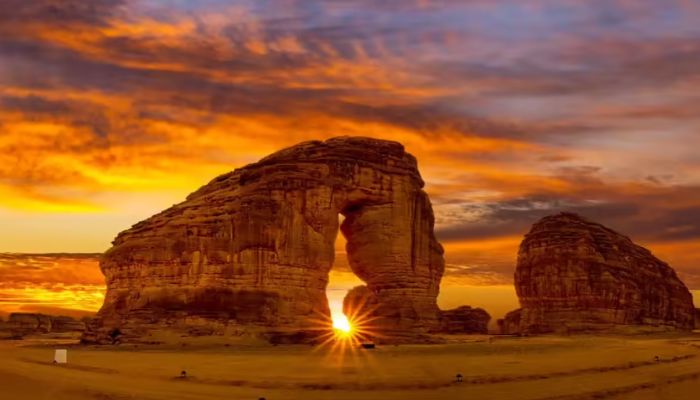
The ancient rock buildings in Hegra near Al-Ula in Saudi Arabia may remind you of the fabulous ruins of Petra in neighbouring Jordan. Nabataean craftsmen hewed both from the red sandstone, and both served as important hubs on the international spice route that ran through the region between the 4th and 1st century BC.
But while Petra ranks among the most popular attractions in the Middle East and is on many people's bucket lists, Saudi Arabia and its sights are only just properly opening up to international tourism
The Witches’ Pass, San Marino
Tiny San Marino sits high above vast plains, entirely surrounded by Italy. Yet despite its beauty, people often name it Europe's least-visited country, alongside Liechtenstein. Mount Titano and the three medieval towers dominate it and have long protected this venerable republic.
You’ll spot them above you as you drive up the winding road leading into the country, but for a more intimate encounter, a walk along the Witches’ Pass is highly recommended. This beautiful path connects the towers and takes its name from a folk tale about maidens who danced around the fire here on moonlit nights.
Picos de Europa National Park, Spain
The Picos de Europa is a stunning national park in northern Spain that has 40 summits over 8,200 feet (2,500m) high. The local Spaniards appreciate its undeniable charms, but, surprisingly, the 85 million international tourists that descend on Spain each year remain relatively unaware of the jagged peaks, alpine lakes, untouched rural villages, and unique mountain cuisine. The mighty Naranjo de Bulnes massif, seen here, is reminiscent of Italy’s Dolomites – but with fewer crowds.
Persepolis, Iran
Iran is not a country on most people’s travel radars. In fact, both the British Foreign Office and the US State Department advise against all travel there. This means that the incredible ruins of the ancient city of Persepolis largely lack international visitors. The ceremonial capital of the Achaemenid Persian Empire between roughly 500 and 330 BC, the ruins of the once-mighty temples and delicately carved statues now lie scattered across the bleak plains of Marvdasht, a monument to the might of the city's founder, the king of kings Darius I.
Hsinbyume Pagoda, Myanmar
Another destination on the UK Foreign Office and US State Department no-go lists due to ongoing civil unrest, Myanmar is nonetheless home to some of the world's most extraordinary attractions. These include the Hsinbyume Pagoda on the western bank of the Irrawaddy River near the fabled city of Mandalay. The blindingly white 19th-century complex is set over seven concentric terraces, representing the mountains that rise up to the mythical Mount Meru. There are niches containing secret statues hidden all over the pagoda.
Khor Virap Monastery, Armenia
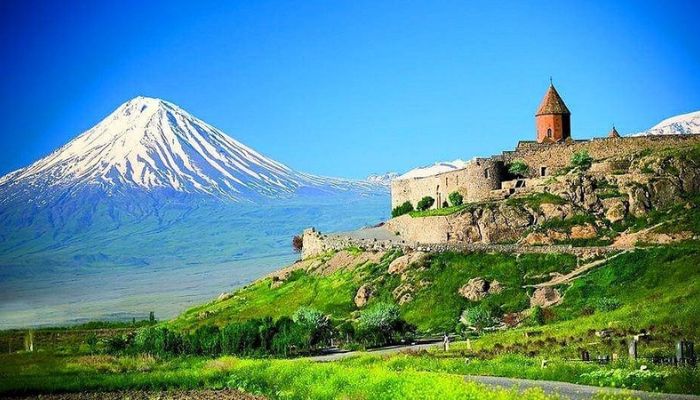
While neighbouring Georgia has been the darling of tourist hotlists for a few years now, Armenia has remained relatively under the radar. That means medieval gems like the Khor Virap Monastery, perched on a ridge and backed by Mount Ararat (of biblical fame), get very few visitors. Established in 642 AD, its name means 'deep dungeon'. You can still see the pit where Saint Gregory the Illuminator was supposedly imprisoned for 13 years in the early 4th century.
Lincoln Cathedral, England, UK
There are more than 40 cathedrals scattered across Britain, each magnificent in their own way. Lincoln Cathedral is surely among the most impressive: a huge Gothic pile first built in 1072 on a hill overlooking the sprawling fens of Lincolnshire. It also ranks among the least convenient – far from major motorways, poorly served by public transport and overshadowed by more accessible minsters in London, Canterbury and York.
But those who make the effort are well-rewarded, and the magnificent building sits just across the way from Lincoln Castle, home to a copy of the Magna Carta.
Conclusion
We always hear about the same five or six famous vacation spots, like the Colosseum or Petra. But there are tons of places out there that are just as cool, and you can see them without dealing with thousands of people blocking your view. Some of these spots are hard to get to, some are in countries with a lot of political issues, and others are just a pain to reach by train or car. But if you actually take the time to go find them, you get to see some of the coolest history on earth completely by yourself.
FAQ
Is there an old stadium that's as good as the Colosseum?
Yeah, look up the Amphitheatre of El Jem in Tunisia. It was built back in the 3rd century. A lot of people think the design is actually smarter and more detailed than the one in Rome. It's practically empty because Tunisia is still trying to get its tourism numbers back up.
Why does Hegra look so much like Petra?
Because the exact same group of builders (the Nabataeans) carved both out of the same red rock. They were both major stops on the old spice trading routes. The main difference is that Saudi Arabia didn't really open up to international tourists until recently, so nobody knows about Hegra yet.
Where is that giant silver Genghis Khan statue?
It’s out in Tuv Province in Mongolia, roughly 34 miles outside the main capital city. It’s a 131-foot tall chunk of stainless steel showing him on top of a massive horse, just looking out over the plains.
Why are Persepolis and the white pagoda empty?
Safety issues. Persepolis is in Iran and the Hsinbyume Pagoda is in Myanmar. Right now, government travel agencies in the US and UK have both countries on "do not travel" lists because of wars and political chaos.
Why don't more people check out Lincoln Cathedral?
It's just awkward to get to. It's an amazing building from 1072, but it sits on a hill far away from the main highways. The buses and trains there aren't great either, so most tourists just stick to easier spots like York or London.