

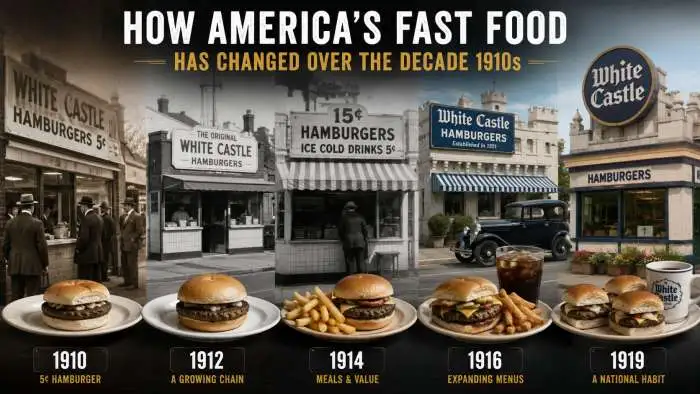
Mention 'fast food' and a few iconic burger brands will probably come to mind. In fact, although 'fast' (i.e. Readily edible on the move) food has its origins way back in ancient cultures, we understand and enjoy the concept now as a modern American creation with a 20th-century pedigree. Join us as we go back in time and discover how USA and Canadian fast-food outlets transformed from coin-operated gadgets and hot dog stalls to bright and modern drive-throughs and techy order points.
1910s: the original fast-food restaurant
When the very first Horn & Hardart Automat debuted in New York City back in 1912, it began a whole new era of dining out. Considered to be America's first fast food chain, this organization rocked 20th-century America by allowing customers to get what they wanted right out of a vending machine by dropping in coins.
Popular for having super cheap prices and its drip coffee on tap, at one point in time there were over 100 H&H restaurants that operated between New York and Philadelphia, and for under 10 cents per dish workers in those areas could even find sandwiches, pies, cakes, and salads!
You may also read :- Healthy Global Cuisines and Unhealthiest Foods You Should Know About
1920s: Nathan gets famous
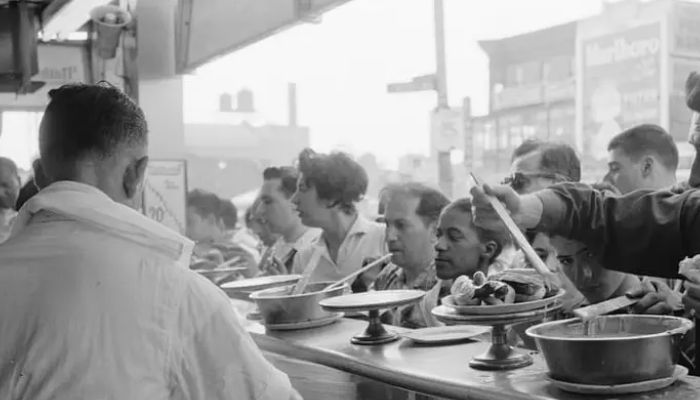
The stall very soon took off due to low prices, good position and good quality hot dogs (according to a secret recipe from Nathan’s wife Ida, that he bought). People working on Coney Island, as well as many visitors, very soon got fond of the stall. In addition to this, numerous famous visitors such as Al Capone and Cary Grant added to Nathan’s prestige. After Nathan opened a second restaurant in 1955, Nathan's grew step by step and finally became one of the most famous hot dog brands in the US.
1920s: burgers are in business
Cleanliness meant everything to White Castle as it opened with open kitchens, creating a bright white and stainless-steel establishment, complemented by its immaculately dressed staff. To this day, the restaurants still resemble miniature white castles, and the brand remains competitive, largely due to the strength of its Original Slider – a patty in a bun that many enthusiasts consider the most impactful burger in history.
White Castle might also deserve credit for inventing the takeout burger. After gradually expanding throughout the years, it established itself as a household name by the 1940s, particularly throughout the Midwest.
1930s: the rise of the diner
Ordering a milkshake and a burger in a gleaming, 24-hour diner offers a classic experience of American life that resonates with many. Entrepreneurs capitalized on diners, turning them into big businesses in the USA, particularly during the country's resurgence after WWII, and as the era of the car ushered in the emergence of suburbia. The iconic diners, with their classic shiny steel facades, trace their origins back to the first half of the 20th century.
1930s: cheap eats
In the beginning, people used diners as really static train cars on rails, or "lunch wagons," that they could relocate to serve diners in various spots. Sort of a 1940s food truck with chairs. Builders replaced that format with cheap, prefabricated, quick-to-assemble structures that also mimic the old wagon style. At least one, like Somerville’s Rosebud - made in 1941 by Worcester Lunch Car Co. - is still operating.
1930s: Canada's first drive-in
When these Americanized eateries entered Canada at the start of the 20th century, they particularly gained popularity in tandem with the expansion of the railway system, as travellers required rapid access to nourishing sustenance during train stops. Oasis Drive-In in Caledonia, Ontario, opened in 1927 and holds the title of Canada's oldest drive-in diner, still operating to this day.
These roadside hangouts dished up the classic American all-day breakfast, burgers and sandwiches, alongside regional specialties. In Quebec, the diner fare sometimes included tourtière, French Canadian pea soup and poutine, whereas diners in the Maritimes served an abundance of seafood, including fish and chips and chowder.
1940s: timeless design
The majority of diners embody the same classic 1950's style, and since designers have also incorporated this aesthetic into American culture, what you see is pretty much what you get. The restaurant offers food, table service, and classic diner seating that present a good value, featuring a concise menu filled with quick-cooked American favorites like burgers, fries, club sandwiches, and complimentary refills of coffee.
1980s: time to party
In a clever tie-in, the packaging and toy of the Happy Meal always correspond with a film, TV show, or toy range. This even meant that in 2011, reports indicated that the fast food chain became the biggest distributors of toys on Earth. Nevertheless, the idea for the Happy Meal truly made it famous; so much so that an entire restaurant in Dallas, Texas, boldly mimicked the classic look of the food (seen here).
The concept of the kids' birthday party also came to life—and it continues to thrive to the present day with special invites, Happy Meals, fun, games, and the occasional appearance of Ronald McDonald.
Conclusion
From the humble coin-operated Automats of the 1910s and roadside hot dog stands to the iconic diner culture and global Happy Meals, fast food has undergone a dramatic transformation. What began as an efficient way to feed working-class Americans quickly grew into a cultural phenomenon that reshaped how the world eats. As technology continues to evolve with digital order screens and app-based deliveries, one thing remains unchanged: our love for a quick, delicious, and nostalgic meal on the go.
Frequently Asked Questions
Q1: What was the first fast-food restaurant in North America?
A: The Horn & Hardart Automat, which opened in New York City in 1912, is widely considered America's first fast-food chain. It allowed customers to purchase meals, sandwiches, and coffee directly out of coin-operated vending machines.
Q2: Which brand introduced the first popular takeout burger?
A: White Castle, founded in the 1920s, played a pivotal role in inventing the modern takeout burger. Known for its small slider patties and distinct white-and-stainless-steel open kitchens, White Castle established itself as a major household name by the 1940s.
Q3: What is Canada’s oldest operating drive-in diner?
A: The Oasis Drive-In in Caledonia, Ontario, opened in 1927 and holds the title of Canada's oldest operating drive-in diner.
Q4: How did early American diners originate?
A: Diners originally started in the early 20th century as mobile "lunch wagons" or static train cars placed on rails to serve workers quick meals. Over time, builders replaced them with cheap, prefabricated structures designed to mimic that classic wagon aesthetic.
Q5: How did fast-food diners adapt to local tastes in Canada?
A: While serving classic American favorites like burgers and all-day breakfasts, Canadian diners customized their menus regionally. For example, Quebec diners offered tourtière and poutine, while diners in the Maritime provinces featured seafood such as chowder and fish and chips.