


Instead of letting rotting, creepy buildings fall apart, people are actually flipping them into cool new spaces. In Berlin, the old Tegel Airport is getting turned into a massive residential community with thousands of apartments, a college campus, and a club, while the city's abandoned Spreepark amusement park is getting fixed up so the old Ferris wheel can finally run again. Meanwhile, old, terrible prisons like the Charles Street Jail in Boston and Bodmin Jail in England were completely gutted and rebuilt as high-end hotels where you literally sleep inside old jail cells and have drinks in what used to be the chapel or the warden's office.
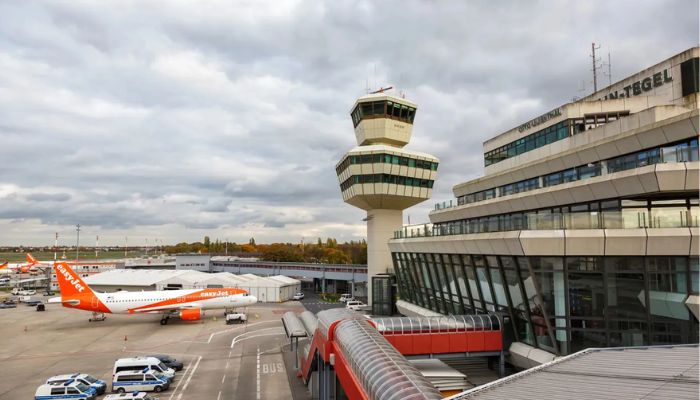
Then: Tegel Airport, Berlin, Germany

Built in 1948 in just 90 days, Tegel Airport initially served as a French military base but opened to commercial aviation in 1958, and in 1975 replaced Tempelhof Airport as Berlin's main airport. Pan Am, Air France and British Airways served the popular airport in its heyday but increasing passenger numbers took their toll, and, despite its best efforts, the airport became outdated and was forced to close. The last flight departed from Tegel Airport in November 2020 to make way for the new Berlin Brandenburg International Airport, which opened in October 2020.
You may also read :- Brilliant Tourist Attractions Around the World No One Visits
Now: Tegel Airport, Berlin, Germany
A £6.8 million ($7.9m) development project called Berlin TXL is well and truly underway to transform Tegel Airport into a residential smart city and environmentally friendly hub. Pictured here is a rendering of the renovation which will include 5,000 homes, a university campus and one thousand businesses.
The project is due to be completed by the end of the 2030s but the first residential area is set for completion by 2027. Plans include vertical gardens, solar panels and a 500-acre nature reserve. Currently, there's a nightclub on the complex, named Turbulence TXL, which opened in autumn 2023.
Then: Charles Street Jail, Boston, Massachusetts, USA
In 1851, builders constructed Boston’s Charles Street Jail at the foot of Beacon Hill to house the city's criminals. With architecture typical of the Boston Granite Style of the mid-19th century, the jail featured a large and innovative design that allowed for plenty of natural light and fresh air. However, over the decades, it became overcrowded and gained a reputation for poor conditions that led to various riots. Officials eventually closed it.
Now: Charles Street Jail, Boston, Massachusetts, USA
When they transferred the last prisoners from the historic jail in 1990, someone abandoned the structure and left it derelict. The forlorn and forgotten institution became something of an eyesore in the gentrified Beacon Hill neighborhood rather than anyone recognising it as an architectural gem. After someone used it for storage on and off over the years, they put plans in motion to restore the historic landmark and transform it into a smart hotel.
The Liberty Hotel opened in 2007 to great acclaim with its sensitive and striking restoration. It’s now one of the city’s hottest hotels with a restaurant aptly called the Clink and its historic catwalks now balconies running above its elegant lobby.
Then: Prora, Rugen, Germany
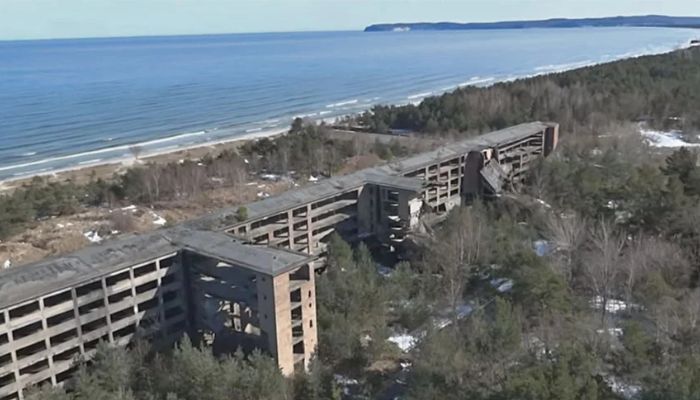
Built between 1936 and 1939 in Nazi Germany, this Baltic beach resort spanned an astonishing 2.8 miles (4.5km) along a lagoon on the Baltic isle of Rugen. A particularly striking example of Brutalist architecture during the Third Reich, the eight vast holiday buildings, which became known as the Colossus of Prora, never served their intended purpose as a holiday resort for German workers.
Now: Prora, Rugen, Germany
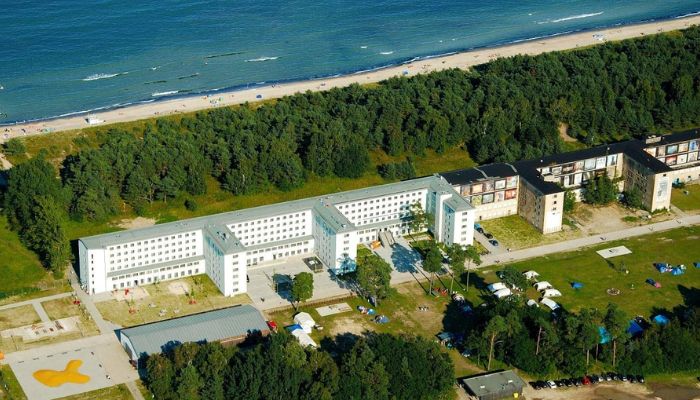
When the Soviet Army took over, various uses subjected the complex before Germany sold it off in 1989 to private developers who left it to ruin. While some parts remain deserted, somewhat controversially, they began works in 2017 to repurpose areas of the vast complex as a residential development and holiday resort that includes the world's largest youth hostel. The state of Mecklenburg-Vorpommern has also bought a section to house a museum about the complex's dark past.
Spreepark, Berlin, Germany
But a new chapter has opened in the park's history. Thanks to a major regeneration project that got underway in 2016, some original rides, including its landmark Ferris wheel, are set to turn again. The team is reviving and artistically redesigning the wheel to reinstall it ahead of 2026. Other abandoned buildings are restoring as cultural spaces, while a new restaurant, beer garden, and playground opened in March 2024. The team expects to open the entire park to the public fully in 2026.
Bodmin Jail, Cornwall, England, UK
Now people are paying serious money to check into the Bodmin Jail Hotel. The architects have retained the unique heritage of this old jail, while transforming it into a well-lit and welcoming place to stay with sophisticated and contemporary touches. The hotel’s airy stone-walled rooms resulted from combining former cells. The old jail chapel has become a delightful restaurant, while the old governor’s office now houses the Chapel Bar. For guests wanting to know more about the building’s dark history, the Bodmin Jail Attraction is next door.
Conclusion
At the end of the day, just because a massive building has a dark history or went broke doesn't mean you have to tear it down. Knocking down old airports, haunted-looking jails, or dead theme parks is a waste when you can flip them into hotels, parks, or neighborhoods. It shows you can keep the cool old architecture around and actually make it useful for normal people, instead of just letting it sit there rotting and ruining the neighborhood view.
FAQs
Q: What’s the deal with Tegel Airport now?
A: They are building a massive neighborhood on the old runways called Berlin TXL. It’s going to take until the late 2030s to finish everything, but it’ll eventually have 5,000 apartments, a university setup, and a massive nature park. They already have a club running on the property too.
Q: Can you really spend the night in those old jails?
A: Yeah, both the Boston jail and the one in England are regular luxury hotels now. The architects knocked out the walls between the tiny cells to make normal rooms, turned the old indoor walkways into balconies for the main lobby, and turned the old jail chapels into restaurants.
Q: Why do people get worked up over the Prora resort?
A: Because the Nazis originally put it up right before WWII started as a giant propaganda vacation spot for workers. It was left completely empty for decades, so turning a place with that kind of history into a trendy beach getaway and a youth hostel makes some people uncomfortable, even though there’s a museum on site now.
Q: When does that old Spreepark amusement park fully open?
A: You can already check out a few spots like the restaurant and the playground. People have been working on fixing the place up for a decade now, and the goal is to get the whole park—along with the fixed-up Ferris wheel—totally open to visitors this year.